PM-KUSUM Scheme (Solar for Farmers): Complete Guide to Benefits, Eligibility & Subsidy

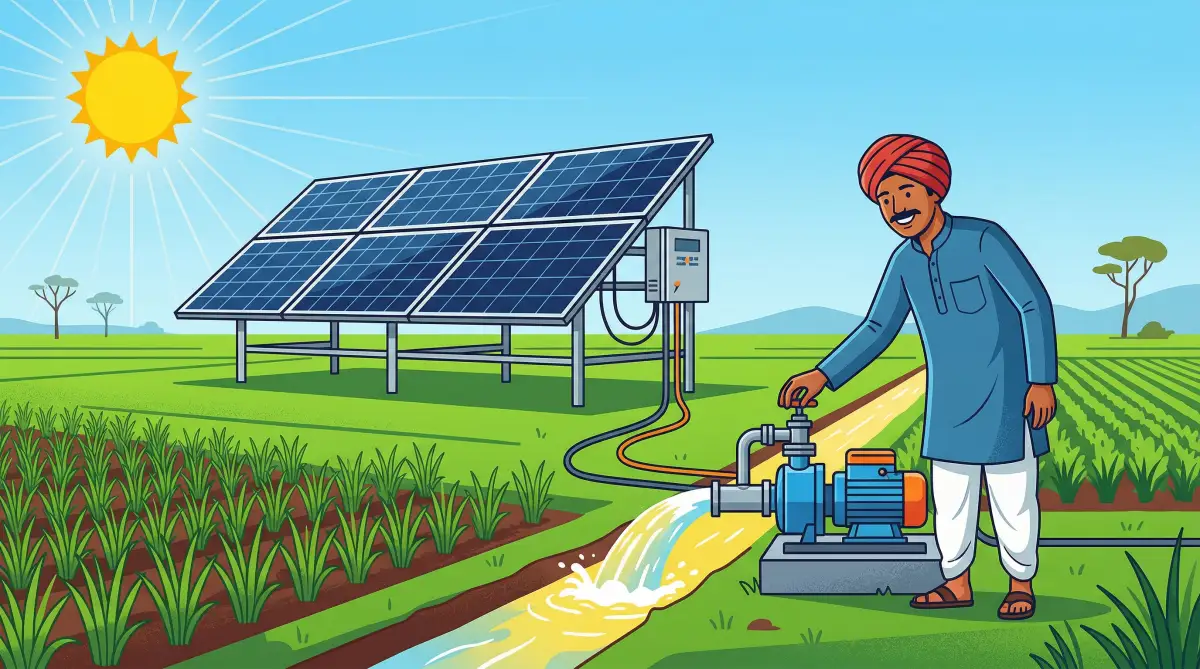
Rising diesel costs and unreliable electricity supply make irrigation expensive and unpredictable for many farmers in India. This directly impacts crop yield and income. To solve this, the government introduced the PM-KUSUM Scheme, promoting solar-powered irrigation systems.
This scheme helps farmers reduce dependency on fuel, lower costs, and even earn extra income by selling surplus solar power. In this guide, you’ll understand how PM-KUSUM works, its benefits, eligibility, and how to apply.
What is PM-KUSUM Scheme?
PM-KUSUM (Pradhan Mantri Kisan Urja Suraksha evam Utthaan Mahabhiyan) is a government initiative aimed at providing energy security to farmers through solar power.
The scheme focuses on:
- Installing solar pumps for irrigation
- Solarizing existing grid-connected pumps
- Setting up small solar power plants on farmland
You can explore official details here:
👉 https://mnre.gov.in/pm-kusum
Key Components of PM-KUSUM Scheme
The scheme is divided into three major components:
Component A – Solar Power Plants
- Farmers can set up small solar plants (up to 2 MW) on their land
- Electricity generated can be sold to DISCOMs (power companies)
- Provides a steady additional income source
Component B – Standalone Solar Pumps
- Installation of off-grid solar pumps
- Ideal for areas without electricity access
- Replaces diesel pumps completely
Component C – Solarization of Existing Pumps
- Existing electric pumps are converted to solar-powered systems
- Farmers can use solar energy and sell excess electricity
Key Benefits of PM-KUSUM Scheme
1. Reduced Irrigation Costs
Solar pumps eliminate diesel and reduce electricity bills.
2. Extra Income Opportunity
Farmers can earn by selling unused solar power to the grid.
3. Reliable Power Supply
No dependence on erratic electricity schedules.
4. Environment-Friendly
Promotes clean energy and reduces carbon emissions.
5. Government Subsidy
Farmers receive significant financial support to install solar systems.
Subsidy Structure Under PM-KUSUM
The scheme offers an attractive subsidy model:
- 60% subsidy (central + state government)
- 30% loan from banks
- 10% contribution by the farmer
This makes solar adoption affordable even for small farmers.
Eligibility Criteria
To apply for PM-KUSUM, you must:
- Be an Indian farmer
- Own agricultural land
- Have a valid electricity connection (for Component C)
- Meet state-specific requirements
How to Apply for PM-KUSUM Scheme
Follow these simple steps:
Step 1: Visit Official Portal
Apply through your state’s renewable energy department or the official portal.
Step 2: Submit Required Documents
- Aadhaar card
- Land ownership documents
- Bank details
Step 3: Approval & Installation
After verification, installation is carried out by approved vendors.
Documents Required
- Identity proof (Aadhaar)
- Land records
- Passport-size photo
- Bank account details
Before submitting your application, you can use a text case converter to properly format and organize your documents, reducing the chances of errors.
Also, if you’re preparing written applications or project details, you can check your word count online to make sure everything is clear, structured, and within the required limits.
Challenges and Things to Consider
Initial Setup Time
Approval and installation may take time depending on the state.
Maintenance
Solar systems require basic maintenance for long-term performance.
State-Level Variations
Implementation and subsidies may vary slightly across states.
PM-KUSUM Scheme Impact in India
The scheme is transforming rural India by:
- Reducing dependency on fossil fuels
- Increasing farmer income
- Promoting sustainable agriculture
It also supports India’s goal of expanding renewable energy capacity.
FAQs
1. What is PM-KUSUM Scheme?
It is a government scheme that helps farmers use solar energy for irrigation and earn income from excess power.
2. How much subsidy is provided?
Farmers receive up to 60% subsidy, with additional loan support.
3. Can small farmers apply?
Yes, small and marginal farmers are eligible.
4. Can I sell electricity generated?
Yes, under certain components, you can sell surplus power to DISCOMs.
5. Is the scheme available in all states?
Yes, but implementation and benefits may vary by state.
6. How long does installation take?
It depends on approval and vendor availability, usually a few weeks to months.
Conclusion
The PM-KUSUM Scheme is a powerful step toward making farming more sustainable and profitable. By switching to solar energy, farmers can reduce costs, gain energy independence, and create an additional income stream.
If you’re eligible, it’s worth exploring this scheme and applying through official channels. Stay organized with your documents, plan carefully, and take advantage of government support to future-proof your farming.